Get in touch

This page explains safe, non-emergency contact options and boundaries, while guiding you toward appropriate services and supports.
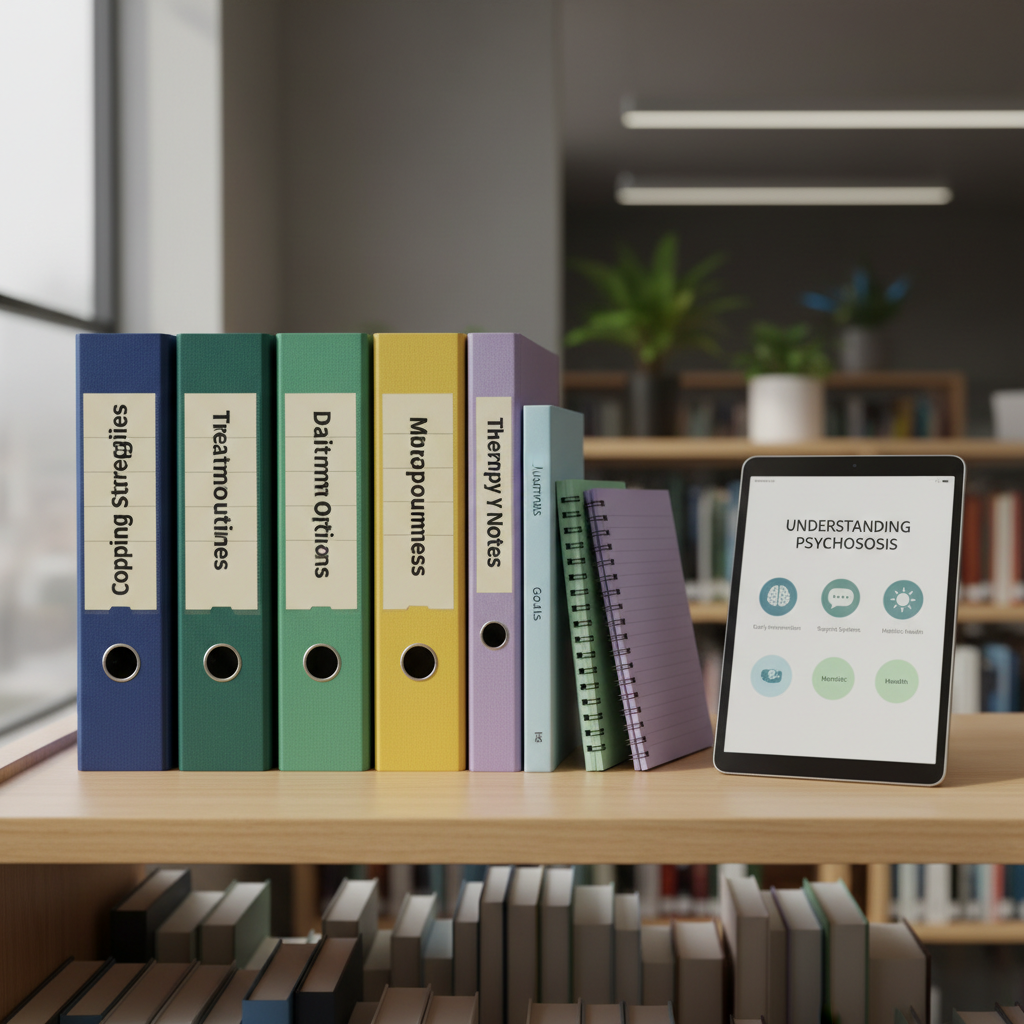
A stack of carefully labeled, color-coded binders and notebooks on a smooth light-ash shelf, each spine clearly marked with topics like “Coping Strategies,” “Treatment Options,” and “Daily Routines.” Beside them, a tablet displays a clean, professional mental health infographic with simple icons and muted blue and green tones. Soft overcast window light enters from the left, casting subtle, reassuring shadows and gentle highlights along the edges of the binders. The composition follows the rule of thirds in photographic realism, with the focus on the labels while the background shelves blur slightly, conveying an organized, trustworthy hub of educational resources about psychosis.
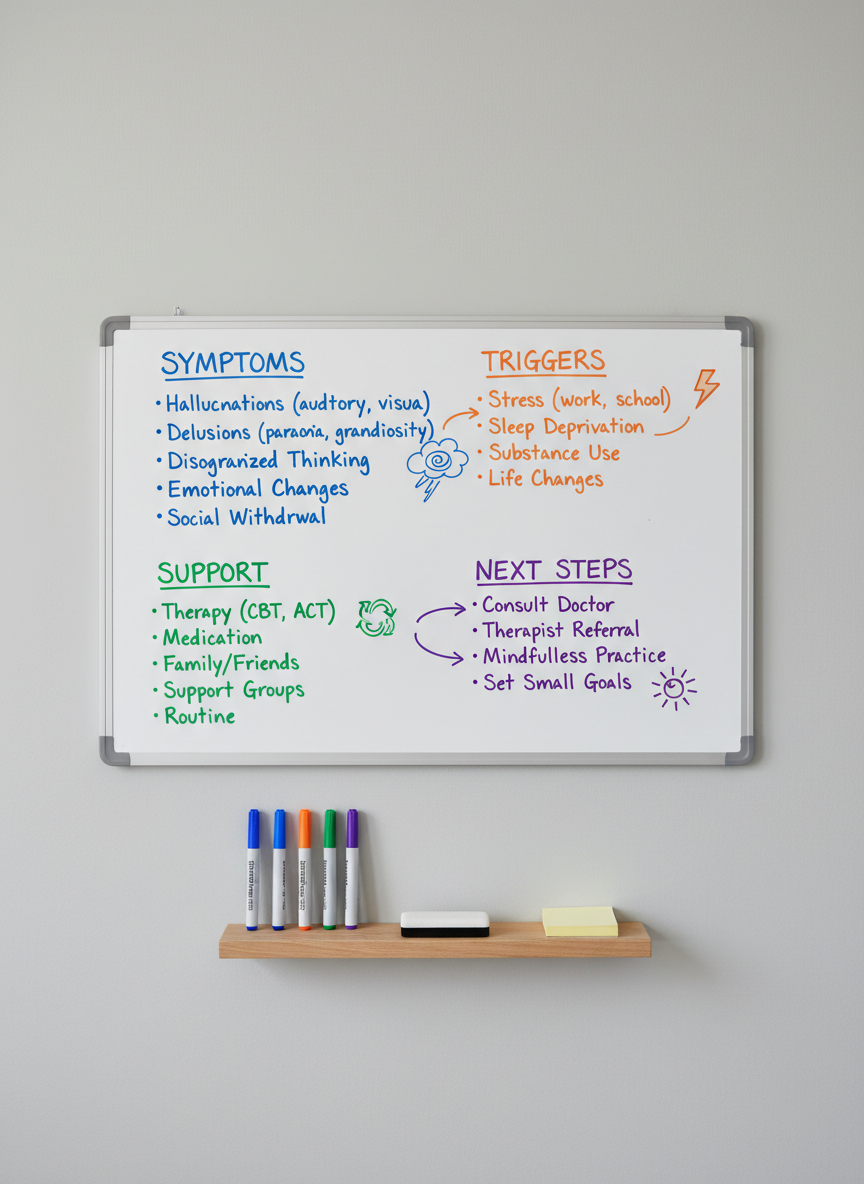
A minimalist whiteboard mounted on a light gray wall, covered with neatly written, color-coded notes and arrows. Sections are labeled “Symptoms,” “Triggers,” “Support,” and “Next Steps,” each in different ink colors, with simple hand-drawn icons like a cloud for overwhelm and a sun for progress. Below the whiteboard, a small shelf holds dry-erase markers, an eraser, and a neatly stacked set of sticky notes. Bright, diffused daylight from an unseen window illuminates the board evenly, creating a clean, clinical yet approachable feel. Photographic realism with an eye-level, straight-on composition and sharp focus throughout, reflecting structured, educational guidance for understanding psychosis.

Crisis steps

We outline plain-language steps for safety planning, quick actions during distress, and how to access urgent resources.

Non-emergency contacts

We share non-emergency ways to reach support and direct you to the right services.

Phone, email, and safe contact options.

Hours: Mon–Fri 9am–5pm; weekends by appointment.